Enterprise AgTech Climate IoT
Industrial IoT Closed-Loop Environmental Automation
Industrial IoT automation and environmental control platform maintaining precise VPD and photoperiod regulation via closed-loop sensor telemetry.
Architecture Highlights
- •Distributed sensor network monitoring VPD (Vapor Pressure Deficit), PAR spectrum, and substrate moisture.
- •PID-based automated climate actuators regulating HVAC, CO2 enrichment, and precision irrigation.
- •Real-time edge alerting with fallback failover preventing crop stress and thermal runaway events.
- •Multi-protocol hardware bridge (RS-485 Modbus, MQTT, and local SQLite telemetry buffer).
Engineering Hurdles Solved
- •Preventing sensor drift and calibration decay in high-humidity (95%+ RH) and sulfur-rich agricultural environments.
- •Designing deterministic fail-safe states for industrial actuators to guarantee crop survival during power and network outages.
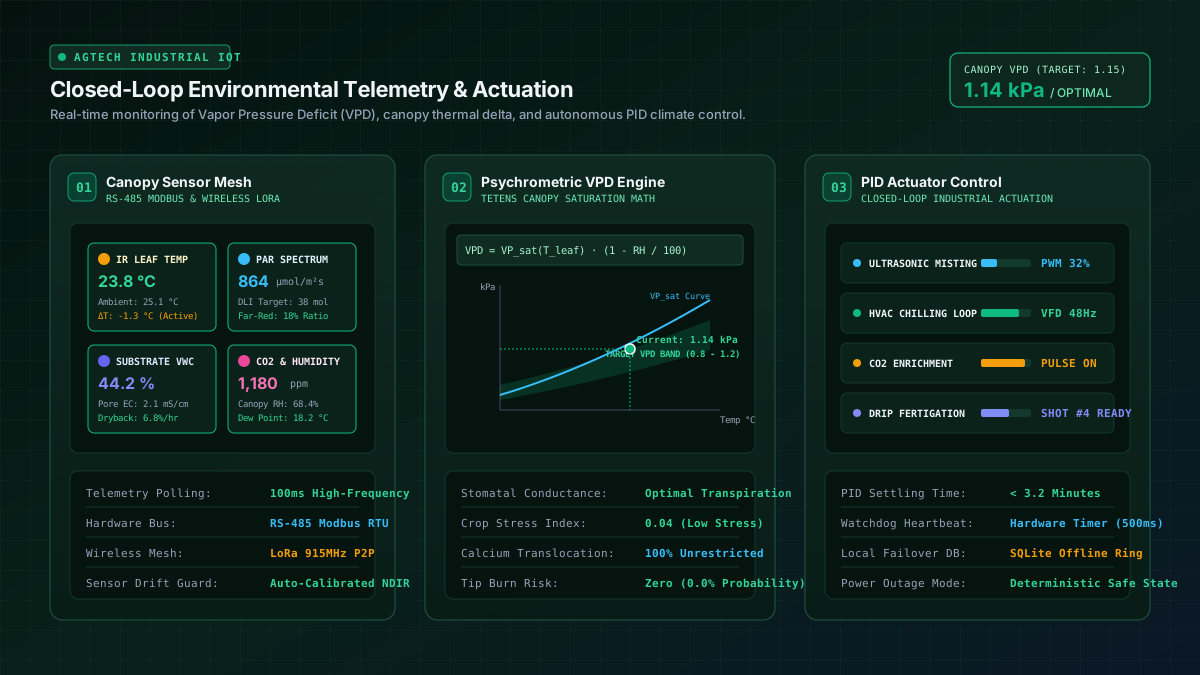
Executive Overview
The Enterprise AgTech Climate IoT Platform modernized commercial controlled-environment agriculture (CEA) by replacing manual spot-checks with autonomous, closed-loop sensor telemetry. By continuously calculating and balancing Vapor Pressure Deficit (VPD), Photosynthetically Active Radiation (PAR) spectra, and root-zone water potential, the engine eliminates environmental drift and prevents crop stress events 24 hours a day, 365 days a year.
Deployed across commercial greenhouse and indoor vertical farming operations, the system integrates industrial-grade hardware sensors with real-time distributed controllers, ensuring biological yields meet pharmaceutical and commercial purity standards.
Plant transpiration and nutrient uptake depend directly on Vapor Pressure Deficit—the difference between the moisture pressure inside the leaf stoma and the surrounding air:
VPD = VP_sat * (1 - (RH / 100))
VP_sat = 0.61078 * exp((17.27 * T) / (T + 237.3))
Where saturation vapor pressure (VP_sat in kPa) at air temperature T (°C) is calculated via the Tetens formulation. Maintaining VPD within the biological sweet spot (0.8 to 1.2 kPa in vegetative growth; 1.2 to 1.5 kPa in flowering) prevents mold sporulation while maximizing cellular transpiration.
Core System Architecture
╭─────────────────────────────────────────────────────────────────────────────╮
│                    ENTERPRISE AGTECH TELEMETRY PIPELINE                     │
├───────────────────────────────┬─────────────────────────────────────────────┤
│ 1. SENSOR INGESTION (100ms)   │ • Substrate EC / VWC (TDR Pulse)            │
│                               │ • Infrared Leaf Canopy Temperature          │
│                               │ • Ultrasonic Airflow & CO₂ NDIR Sensors    │
├───────────────────────────────┼─────────────────────────────────────────────┤
│ 2. EDGE PID CONTROLLER        │ • Proportional-Integral-Derivative Loops    │
│                               │ • Anti-windup Integrator Clamping           │
│                               │ • Dynamic Target Setpoint Tracking          │
├───────────────────────────────┼─────────────────────────────────────────────┤
│ 3. ACTUATION MESH             │ • Variable-Frequency Drive (VFD) Fans       │
│                               │ • Ultrasonic Foggers & Dehumidifiers        │
│                               │ • 0-10V Dimming Spectrum LED Drivers        │
╰───────────────────────────────┴─────────────────────────────────────────────╯
🛡️ Industrial Resilience & Fail-Safe Hardware Architecture
In commercial cultivation, an actuator failure or network blackout lasting just 45 minutes can cause catastrophic crop loss:
- Deterministic Hardware Watchdogs: Every microcontroller node runs independent hardware watchdog timers. If the central edge gateway loses communication, local nodes revert to pre-programmed autonomous safe-zones.
- Zero-Power Fail-Open / Fail-Closed Actuators: Critical ventilation louvers are spring-loaded to fail open in extreme heat events, allowing natural convection cooling during total electrical grid loss.
- Local Store-and-Forward Buffering: Sensor readings are buffered in non-volatile flash storage on each edge gateway, syncing to the central analytics database once connectivity is restored.
- Kalman Noise Filtering: Multi-sensor arrays employ Kalman filters to reject spurious telemetry spikes caused by water spray, dust accumulation, or radio-frequency interference from high-voltage ballasts.
Technology Stack
- Hardware & Firmware: C++, FreeRTOS, ESP32, STM32, RS-485 Modbus RTU.
- Edge Gateway & Telemetry: Python, FastAPI, MQTT (Mosquitto), SQLite Local Spool.
- Cloud & Visualization: Node.js, WebSockets, Tailwind CSS, Highcharts, Docker Sandboxed Microservices.
- Environmental Standards: ASABE S640 (LED Radiation Quantities), OSHA Industrial Electrical Codes, Good Agricultural Practices (GAP).
Explore More Systems
View full portfolio of AI architectures, creative technology, and open systems.